

2026-08-27 08:00:00
A few days ago, İsmail sent me an email asking if he could send me some questions to answer for his Turkish-language blog. I really liked the questions and thought they would fit well here on my blog too, as they are all related to the topics I discuss here. You can find the original interview here.
My name is Alberto, and I really enjoy making apps and writing. I’m naturally curious, so I suppose I have more interests than I’d sometimes like to admit. When I’m away from a screen, though, I mostly take photos, travel, write, read, and go for long walks.
Basically, I live the life of a retired gentleman.
It all started back in high school. A few friends and I had a football blog where we wrote about something we loved, and we spent a lot of time working on it. The blog was hosted on Blogger, and I was already interested in design at the time. I had also learned to use Photoshop a few years earlier.
So when we decided to give the blog template a new look, I was the one who took on the job. I started with the basics, copying and pasting lines of HTML and CSS without really understanding what I was doing. And that was the beginning of my journey into software.
That curiosity you’re asking about is something I’ve thought about a lot. I think it comes from scarcity more than abundance. We live in a time of abundance in almost everything: food, information, relationships, entertainment, activities. And when everything is available all the time, it can become difficult to leave enough space to think, reflect, or simply let something catch our attention.
The fact that we can see what’s happening on the other side of the world with a single click, know exactly what a place will look like before we travel there, or watch 400 YouTube reviews before buying something also takes away some of the excitement. By the time we finally have the thing or arrive at the place, we already know so much about it that there’s less left to discover.
I think curiosity comes from things we haven’t seen before. From picking up a book without reading any reviews and being surprised by it. From choosing a movie at random and discovering that it’s completely different from what we expected. From getting lost in the streets of a random city. From listening to a genre of music we’ve never heard before. From signing up for a class we never imagined we would take.
Curiosity starts with scarcity, with boredom, and with that little spark that comes from being surprised by something or discovering that we like it.
That’s why I think we need to be more careful about what we consume and leave a little more room for the unknown. We should allow ourselves to be a bit more blind to what’s coming next and give ourselves the opportunity to explore it without already knowing what we’re going to find.
That same idea, of leaving room for the unknown, connects to why I think imperfection matters. It brings out the most human part of us. We are all deeply fallible, and it is precisely this shared vulnerability that allows us to empathize with one another. We are all made up of successes and failures, and it is often through these shared experiences that we connect with other people.
That is one of the beautiful things about being alive: knowing that you are going to make mistakes, that things will not always go according to plan, and that both nature and the world around us are inherently imperfect. Those imperfections are what give life its unexpected turns and make it interesting. If everything were perfect, the world would, sadly, be rather boring. It is all those rough edges we each carry that make us more interesting to others. They may be similar, but no two people have exactly the same ones.
There is a very clear example of this in the article, where I talk about the movie Her. The film takes place in a futuristic world where AI is incredibly powerful and can practically do everything for you. Yet Theodore, the protagonist, spends his time writing handwritten letters.
Why? If AI can write them better and more perfectly, why would he do it himself?
For the same reason you might treasure your daughter’s imperfect drawing or a handwritten letter from a friend more than something technically flawless. You appreciate the effort behind it. You can feel that someone took the time to think about it, to write it, and to make it with care. It may not be perfect, but it is completely theirs. And that imperfection is precisely what makes it meaningful.
Following on from that, I think there’s still a glimmer of hope in such a homogeneous world. We have access to all the information in the world, so that’s where I would start.
Read books that were written more than 100 years ago. Escape the bestseller section and look for books written by authors from countries you know little about. The same applies to other forms of content. Search YouTube, follow whatever topics genuinely interest you, and get lost in Wikipedia.
And this applies to the offline world too. Visit lesser-known cities. Explore neighborhoods that aren’t popular where you live. Go to local shops and look for old books, movies, or objects they happen to sell. Visit a street market and look for things from another era.
Take ideas from all these things that aren’t part of the mainstream and give them your own unique perspective. Your voice is unique, and it’s something nobody can take away from you.
The way all those different interests come together is what makes you unique. Add your own life experiences to the mix, and I’m sure something uncommon can emerge from it.
That same personal starting point applies to what I build, too. My approach has always been pretty simple: is it useful to me? If the answer is yes, I build it. If the answer is no, I don’t. That’s basically it.
Of course, if you want to make a living from building software, you eventually have to go beyond that. But I still think this first part is important. When you use something every day, you can improve it through your own experience. You feel the frustrations of using something that doesn’t work well, and you naturally start thinking about how it could be better.
It’s much harder to solve a problem from the outside when you’re not experiencing it yourself. It’s easier to fix a problem from within, although sometimes being on the outside can give you a clearer perspective.
Coming back to curiosity, I’ve never really learned anything in a formal way. I was a mediocre student at school, and I’ve never been the best at anything. Letting go of the idea that if you learn something, you have to be good at it is incredibly liberating. It allows you to approach learning more like a game.
For example, I’m learning Chinese now because my wife is from Taiwan. But I’m in no rush, and I don’t have a specific goal I want to reach within a year or two. I’m simply trying to set aside some time each day to do something without a clear objective, where the goal is simply to see what happens.
You can spend that time reading about something completely unrelated to your work, watching a movie that looks interesting, going for a long walk and exploring parts of your city you don’t usually visit, sitting in a café and watching people, or simply lying down and doing nothing.
Curiosity tends to emerge when we have nothing to do. Children start asking questions when they get bored, and they start looking for things to entertain themselves when they get bored. That is where curiosity comes from: boredom.
That freedom I just mentioned, to set my own pace, is really at the center of how I think about success. I think of success along three axes: freedom, time, and relationships.
In a capitalist world, pursuing freedom and time usually means you need money. But when you stop putting money first, you often find that you need less of it too.
People who put money first can end up losing both freedom and time in the process of pursuing it. If you know what “enough” means for you, I think it makes sense to build your life around that instead.
I’m nowhere near rich, and I probably have enough savings to live for a year or two. But having the freedom to start new projects, experiment, and see what happens, along with the time to actually do those things, is what a successful life looks like to me.
Having good relationships with the people you love is the other piece of it. In a way, this becomes much easier when you have freedom and time. You can actually spend time with them, and you have the mental energy to be present.
So I suppose that’s my definition of success: enough money to have freedom, enough freedom to have time, and enough time to share with the people I love.
5 Movies
5 Series
5 Books
5 YouTube Channels / Blogs
I never follow the news, or keep up with what’s happening in the world, unless it’s something so big that you simply can’t escape it.
If you do want to follow the news, I’d recommend finding a newsletter from an independent writer or publisher and supporting them directly. Otherwise, I think it’s very easy to end up with a distorted and overly negative view of the world, because the things that make the news are rarely the things that represent everyday life.
The industry is tough these days. But if you want to get into it, you have to find a way to differentiate yourself.
Maybe that means developing skills beyond programming that can make you more valuable, or building connections through social media by sharing the things you’re working on.
Experimenting, trying things, and talking to people are incredibly important skills in any industry. One thing is for sure: a company isn’t going to show up at your door and offer you a job. You have to put yourself out there.
And if you want to get better, copy things at the beginning and learn from them. Copying is a way of understanding how someone else solved a problem, so that eventually you can take what you learned and try to do it better yourself.
My days are deliberately unstructured. I usually go for a walk in the morning and work in the afternoon, but everything else is open.
Some days I go hiking, some days I work from a café, and some days I meet someone. Some days I play games, like Football Manager or Pokémon. Other days, I might have a simple idea for a project and spend the entire day working on it. Sometimes I just feel like writing, so I write and write.
There are a few things I need to do every week to keep the business running and take care of myself as a human being. Beyond that, most of my time is driven by pure curiosity.
I’ve always enjoyed sharing the things I experience. As Tarantino puts it, “I do film for myself and everyone is invited.”
I think that captures the essence of a blog. You write about what you experience, in your own way, and invite other people to get to know you through it.
I think the first blog I started was back in 2011, although honestly, I don’t remember exactly.
What I do know is that blogging is a fantastic way to find like-minded people. That’s probably the main reason I keep writing: to connect with others.
If you can make money from something you genuinely enjoy putting your time and effort into, that’s amazing, right? It’s no different from any other kind of job. Most people would rather make a living doing something they enjoy than spend their days somewhere that makes them hate what they do.
As for how to do it, I honestly don’t know because I’m not a content creator. But I suppose the first step is to stop thinking of yourself as a “content creator.”
I see two possible paths: the easier one, although still difficult, and the harder one, which I find much more appealing.
You can follow the trends, make whatever kind of low-effort videos are getting attention, and put them online hoping that someone looking for a quick dopamine hit will watch them. Or you can create something you genuinely care about and put real effort into it. Of course, the second path takes much more time, and there’s no guarantee that it will work.
But if you eventually succeed, I think you’ll feel a sense of achievement that you could never get from simply chasing whatever happens to be popular at the moment.
The other thing I’ve learned is that things usually take much longer than we expect. It can easily take five or ten years of working on something without getting much back from it. So I would ask myself a simple question: what would I still be willing to work on for the next five or ten years even if I didn’t get much in return for everything I was putting into it?
I think that’s a much better way to decide what’s worth pursuing.
The only way I’ve found that works for me is to deliberately make time when you don’t use the internet. Time for yourself.
Again, it comes back to the two axes I mentioned in a previous question: freedom and time. If you have the freedom to decide how you spend your time, and you’re not tied to an office job where you need to be constantly available or to a company that fills your calendar with meetings, you can actually do it. You can spend time doing whatever you want without checking a single device.
It’s difficult, but attainable.
This one is really difficult. In my case, I’m very sensitive to sound, and I’ve never really found a good way to experience true silence.
The only solution I’ve found is to escape to a rural place a few times a year and spend some time there. But even that takes a lot of effort. It can be expensive, and quite often you arrive somewhere expecting peace and quiet only to find people being loud anyway.
I suppose that’s the frustrating thing about silence: sometimes you have to go quite far to find it, and even then, you can’t really guarantee it will be there.
Supermarkets are full of shit. This one is actually very easy for me now. I simply buy basic ingredients, and we cook from scratch at home about 95% of the time.
The difficult part is that you have to be extremely conscious about what you’re buying. You need to check ingredients and labels like a maniac every time you go grocery shopping.
It’s sad that it has to be this way, but for me, it’s the only way to avoid buying things I don’t actually want to eat.
I suppose the only way we’ll see more of this is by supporting these kinds of businesses. Try to buy locally, from grocery stores where you know the people behind the counter. Support online businesses run by small teams that genuinely care about their customers and take customer service seriously.
At the end of the day, we have the freedom to choose where we spend our money. We can use that freedom to help these businesses grow instead of allowing them to be pushed aside by large corporations.
This is a bit like food. You need to do the research and be a maniac when you’re shopping. There are options, but the quality can be surprisingly poor.
So my advice is simple: have less, but buy better quality. And whenever possible, look for natural fibers. Your body will thank you.
I’ll tell you two stories about taxis that I think illustrate this really well.
The first one happened in Spain, where I’m from. My partner at the time and I were taking a taxi to the airport when the driver fell asleep at the wheel on the highway. We almost had a very serious accident. I contacted the taxi company afterwards, expecting them to take the situation seriously, but they did absolutely nothing. Nothing at all. That driver simply continued driving irresponsibly, and I can only hope that nobody was ever hurt because of it.
The second one happened in Istanbul. My mother and I were heading to our apartment from the airport, and I had booked the taxi through BiTaksi. When we arrived, I accidentally left everything in the taxi: my passport, wallet, AirPods, and several other things. It was a complete mess.
I called BiTaksi thinking, “They’re probably not going to do anything about this.” But it was exactly the opposite. They helped me throughout the whole process, in very good English, contacted the driver, and eventually he brought everything back to me. I only had to pay for the return trip to the apartment, which I thought was completely fair.
I’ll always remember that gesture because it allowed me to enjoy the rest of the trip with my mother instead of spending the whole time worrying about what I had lost. And I think that experience completely changed how I saw the country.
Turkey, and other countries like it, sometimes have a reputation for being unsafe. But in this case, I can only say good things about Turkey. I love the way you treat tourists. There’s always a smile, someone offering you tea, someone stopping to talk and ask questions. That curiosity I’ve been talking about throughout this interview.
What impressed me most is how much the countries around the Mediterranean share in terms of values and our general approach to life, despite our obvious cultural differences. We like to live life, enjoy time with friends, have a drink together, and talk for hours. We are brothers and sisters of the same sea.
We also have a very different relationship with work and life compared with more Protestant-influenced cultures such as the Nordic countries, Germany, or Switzerland. For us, life is not something that happens around work. Work is part of life, but life itself is at the center. I think that makes it easier for us to connect with each other.
I’ve been to Turkey twice, and I hope to come back many more times.
I’ll leave you with a phrase I really like: “Los tiempos se igualan”, which roughly translates to “times even out.”
It basically means that both good and bad times will come. Both are part of life. If you’re going through a difficult period, you can take comfort in knowing that better times will eventually come. And if you’re going through a good period, enjoy it, because it will eventually pass too.
Life is very fleeting, and sometimes we give far too much importance to things that ultimately don’t matter that much. So if you’re reading this and there’s something you want to try, do it. Don’t overthink it. Go for it.
In the end, we didn’t come into this world with a predetermined purpose. We give life meaning through the things we choose to do.
There’s a line from Emerson’s Orchard by the Spanish writer Luis Landero that I really like:
To live is to be on a journey toward nowhere, and only the journey gives meaning to existence.
2026-08-24 08:00:00
I have been following Herman’s blog for quite a while. I like how he writes, the clarity of it, and how easy he makes it look. I read every post, and I like his way of looking at life. We have exchanged a few emails and we have plenty in common, like the idea that cities need more trees, or that social media should be for meeting people and building relationships, not for playing at who has the most likes.
Without further ado, here is Herman.
I’m Herman Martinus, the person behind the Bear blogging platform and a few other projects. I love building things, both physical and digital, and live in Cape Town, which I’m quite fond of.
Staying connected with people without social media is easy. We’ve been doing it since, well, forever. I meet up with friends and family multiple times per week, whether it be for a dinner, or a run, or to hang out at our little community studio. I’m also, I feel, more interested in socialising now that I don’t use social media, since I’m not on the drip feed of pseudo-socialising.
As for staying current, I generally hear about anything I need to know from the people around me, or on Hacker News. I explicitly try to avoid US-based politics, as difficult as that may be.
I’ve been off social media for so long that I sometimes forget that this meta-digital/social layer even exists at all. I have more time in the day, am less anxious about the world ending, and I feel like I get to explore nuance in a way that is just not available on traditional social media.
I’ve actually written a whole post about this titled Grow slowly; stay small, which expands on my philosophy around building software even further. It also uses traditional Japanese shinise as an example, which stands in stark contrast to the growth at all cost mindset of the West.
If I were to tragically disappear, Bear would be taken over by a trusted custodian who is to run it according to the existing ethos. I have made these arrangements, which while quite morbid, are important for what I’m trying to achieve with Bear.
I see business less as a standalone thing, and more as a reflection of my personal philosophies. I’m happy to forgo revenue in order to do whatever I believe is correct or interesting. I am also hyper aware of how privileged of a position I am in where I have multiple small projects funding my lifestyle, and so don’t have the external pressures that usually come with building software. I’m also lucky that my projects spread through word of mouth, since I’m somewhat averse to marketing as I believe it has ruined the internet.
Here are a few things I do in a usual week: read (this I do every day), exercise (this could be a run on the promenade, followed by a sauna with a friend, or going to the gym, or a yoga class), spend time at the community studio with people building things, spend quality time with Emma (my fiancé), go on a hike with friends, and drink good coffee. I also enjoy cooking and have recently been exploring Japanese cuisine after our most recent trip.
I like having a fairly standard, yet relaxed morning routine. Pretty much every weekday morning goes like this: I wake up at 6am and make some coffee. I then wake Emma up and we sit on the couch and drink coffee and watch the sun rise over the Paarl mountains. We chat and check in with one another, then head to the gym or yoga at around 7. After exercise we make breakfast and shower, and then I turn on my computer and write in my journal for about 3-5 minutes. I work without distractions until about 12, and thereafter the day can get as chaotic as it pleases. I’ve done all the important bits. Emails, admin, evening plans, it doesn’t really matter.
The first half of my day is for me, the second half is for everything else.
My role has transitioned over the past few years from builder to groundskeeper. While I still do active development, a lot of my attention is now making sure that Bear is a cozy space on the internet, keeping scraper and malicious bots at bay, and polishing the edges of things. I’m uncertain of what the future of the internet looks like, but I’m trying my best to be ready for it.
I like books, so books will be my recommendation. If you’re looking to build something (or have already started), I recommend reading The Mom Test by Rob Fitzpatrick. It’s all about idea validation and ensuring you’re building the right thing. If you just want a good read, I recommend City of Thieves by David Benioff, or anything by Terry Pratchett. I could probably only read Terry Pratchett’s books for the rest of my life and be quite satisfied.
Emma reckons I should throw in a recommendation for the film Perfect Days as well.
2026-08-18 08:00:00
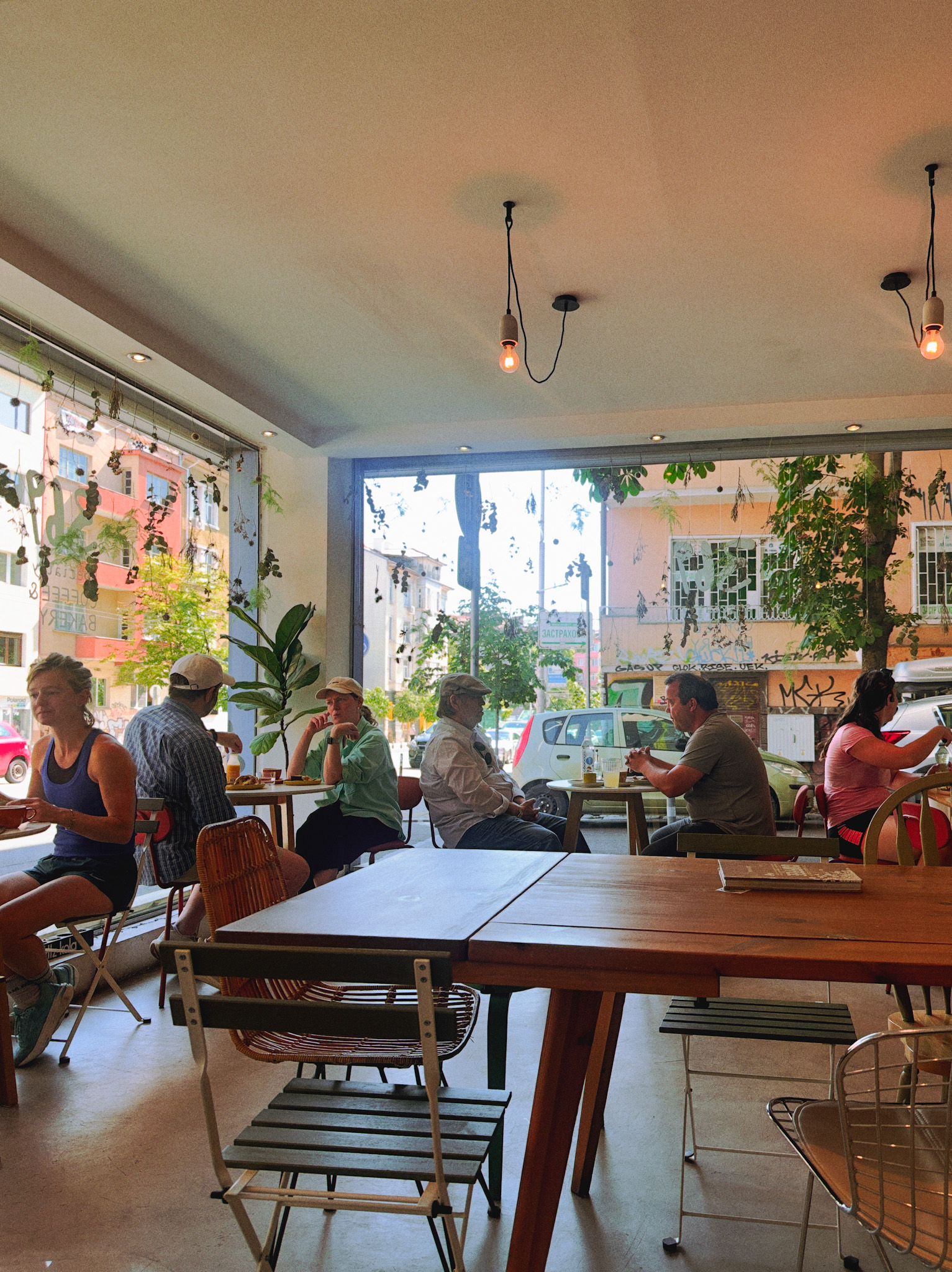
A few days ago I was sitting in a café in Sofia, thinking about things that were normal when I was a kid, or even when my parents were, and that now take real effort to get.
It’s not that they’re out of reach. It’s that you have to go hunting for them.
The world has gone digital to the point where everything happens online. That brought plenty of good things, but it stripped away something simple: the right to disconnect.
Half the time you can’t leave the house without your phone, because certain places need you to carry a small computer in your pocket to do anything at all. My least favorite: reading a restaurant menu off a screen.
For a while, traveling around, I went looking for places where I could sit in silence (absolute silence doesn’t exist, but you know what I mean). It was much harder to find than I expected.
And the worst part is that something that should be possible almost anywhere has turned into a business. Countryside houses that cost more than a downtown apartment. Meditation and silence retreats. All of it selling something that used to come included.
One of my favorite things about being in Sofia is that the small food shops are still standing. There are supermarkets, but most of your shopping happens across 1 to 3 different places: the greengrocer, the butcher, the fishmonger.
And it’s exactly there, in the shops selling local and seasonal produce, where the bill comes out higher. Across the street sits the supermarket, stocked with things flown in from the other side of the world and ingredients you couldn’t pronounce, closer to a chemical compound than to food.
That’s the cheap option.
Most shopping happens online now, and with big companies it’s basically impossible to reach a human (Amazon being one of the few where it still works).
But it isn’t just that nobody picks up. The whole act of talking to someone has turned into a chore.
When I was a kid I’d walk into a shop, ask the woman behind the counter, and she’d tell me what to buy. You built a relationship, she knew you, and that was worth a lot to me.
For a while now I’ve been buying almost only natural fibers. You wouldn’t believe how hard it is to find something fairly priced, well made, and that doesn’t fall apart in 3 to 6 months.
It’s a miserable process. Hundreds of brands, nearly all online, nothing you can try on, no way to know if it’ll last.
I bought a merino t-shirt from a French brand with glowing reviews and it lasted less than shirts I’ve paid 5€ for. 60€ in the bin. That’s the part that wears me down: not the price, but that you can read, compare, choose carefully, and still get it wrong.
Looking at the list together, the price isn’t what bothers me most. It’s the time. Reading, testing, researching, comparing.
All that searching gets paid for in attention, which is the first thing on the list.
I get that this is a problem of scale, and that cheap goods have let a lot of people live better. I’m not going to pretend otherwise.
But when the floor drops that far, what used to be ordinary can be sold as premium. That’s how a wool t-shirt ends up with a luxury tag and a seasonal apple costs 3 times as much.
None of this is exotic. These are ordinary things. What’s strange is that getting hold of them has turned into a project.
2026-08-17 08:00:00
2026-08-13 08:00:00
Almost 2 years after I interviewed Alex, this section is back. I wanted to pick it up again, and there is nobody better to do it with than Lucas. I had been following Lucas for a while (on Twitter, not physically) while he was building Futureland. But it was his work on Amore that got us talking. We have many ideas in common, and we share many values about software development, but also about life.
We talked about computers, care, the App Store, and what happens when the thing you worked on for years doesn’t work out. I hope you enjoy as much I did.
Hallo, I am Lucas Fischer, a full-stack design engineer from Germany who loves computers. Popular projects I have worked on include Futureland, Monologue and Amore.
The thing I love most about traveling and visiting different cultures is seeing that in a way we are all the same. It’s beautiful. We share the same problems, grief, and worries but also feel the same joy and bliss. Experiencing that makes me feel more part of the earth than a single nation. I wish everybody would have the freedom to travel and live wherever they want. It would be good for us.
It probably changed me in ways that other people could describe better, but I noticed that it made me feel less sensitive and more open. I was a pretty picky eater, but now I enjoy everything. Exploring a new cuisine is one of my favorite things to do abroad.
I have been in love with computers since before I could read. The family computer was mostly occupied by me, and I would spend hours exploring what I could do with it. I played plenty of video games and experimented with every other program that was available to me at the time. That was around the Windows XP and Windows 7 era.
When I started high school, I had a side job as a bartender, and the cool thing to buy at the time was an iPhone 4, which introduced me to the Apple world.
At that point I still wasn’t coding or anything. Not much later we had an excellent computer science teacher who taught us Pascal. While my friends absolutely hated computer science class, I got hooked on coding immediately. Before that moment I was thinking about a career as a chemist, but after compiling my first Pascal program I knew this is what I want to spend my time on.
A good friend of mine had a MacBook Pro, and I thought it was the coolest thing ever. I saved up all the money from bartending and got one myself right before college.
The coding part of college felt easy, and so I didn’t have to attend classes much, which gave me a lot of time to play around with my Mac and Raspberry Pi. That’s when I started to build my first little web apps.
During college I got lucky and found my first few freelance clients, which taught me a lot about web development.
I always adored native Mac software, but I found it challenging to work on it myself. I tried a couple of times to get into making apps with Objective-C but always gave up after a couple of hours. It felt too hard.
When I worked on Futureland, we decided we wanted to have an excellent experience on iOS, so I learned Swift and got to work. Since then, I have barely worked on anything apart from Apple platforms.
While there is a lot of excitement about iPhone apps and the App Store, I always found myself more excited about the Mac. I think it’s because I spend way more time on it compared to my phone. It’s a great platform that doesn’t get the love it deserves from Apple.
I just love the Mac. I hope I can make a little dent and help other developers to build great software for it.
Thank you <3. When using something, no matter if it’s software or a physical tool, it makes me incredibly happy when I notice that something was created with great care.
In software today, I see that less and less, unfortunately. Most of it feels cheap and careless. In the end I just want to create something that I use myself and that I can proudly share with friends and family. If I can’t stand behind my work, why even do it?
I rarely design something in ‘design software’. I believe design is how something works and feels. That’s difficult to figure out with a tool like Sketch or Figma.
What works best for me is a lot of prototyping. On the web, I made heavy use of HMR (Hot Module Replacement), and on the Swift side, I depend on SwiftUI Previews.
When nothing works, I ask my much more talented friends for advice and look through my ‘inspo’ folder, which contains hundreds of screenshots and screen recordings from apps and interactions I like.
Additionally, I find it useful to record my work and share it online. Right before I hit the publish button is usually the moment where the weaknesses of my work are most obvious.
It probably comes down to freedom. Having a single company decide what I can and can’t do on an iPhone is super limiting and frustrating. There are numerous apps that will never be built because they would have to go through Apple’s review process first. It’s not really possible to build personal software that’s only used by me and some friends and family.
It’s also limiting for larger projects I have worked on. Sometimes important updates don’t go out to users in time because Apple claims the app is against their guidelines when it’s not. There are thousands of stories like this.
The App Store is great for visibility, though, which seems to have changed for the worse recently too.
I am grateful that things are looking different on the Mac. Here we can use Developer ID for direct distribution, which means we don’t need to ask Apple for permission to publish an app and can skip the App Store altogether.
With Amore, I try to make sharing apps with others, no matter if privately or commercially, as easy as possible. There is no app review and no 30% Apple tax. Just everything you need to build apps for the Mac.
There wasn’t a single worst moment for me. I think not finding commercial success for Futureland after working so hard for multiple years was the worst thing that happened to me. I am grateful that I went through this time with amazing co-founders that I still consider close friends.
It took me a while to get back on my feet afterward, but it taught me valuable lessons, and I am grateful for where it led me.
The freedom to spend my time however I want to. This hasn’t really changed much since I started freelancing in college. I find the position I am in extremely privileged and wouldn’t want to change with someone else.
I honestly have no clue, but looking at the history of capitalism, I am mostly pessimistic about AI. I hope we will spend more time with other humans and reconnect with nature, but seeing how the majority of people are using this new technology today, I am worried about the opposite.
My utopia would be to have more time to follow our curiosity and interests. I would love it if we all had more time for play and spending quality time with each other.
I don’t like foundational models. They are ethical and environmental nightmares. They have utility, which has clearly been proven, but there is so much more to talk about, which is grossly under-discussed.
In my work, I have found LLMs to be useful for research, prototyping, and code review. That’s where they can cause the least amount of damage and be actually helpful. I try to keep them out of the creative process as much as possible because they make me lazy and stifle my imagination.
For software, I’m a big admirer of Reeder by Silvio Rizzi and Ivory by Tapbots, as well as Martin Lexow’s work in general.
When it comes to music, I find a lot of inspiration in the work of Kieran Hebden and Damon Albarn.
To unwind, I enjoy reading and watching films. “The Courage to Be Disliked” is a book I read years ago that still resonates with me. For movie enthusiasts, I highly recommend “Sore: A Wife from the Future”, which is, in my opinion, the best Indonesian film I’ve seen to date.
2026-07-29 08:00:00
It’s been five months since my last entry. I’ve been busy, but I guess that’s life. I’ve really wanted to write, and I’ve done a lot of it privately. So, I’m going to try again to pick up this habit of writing in public.
I’m writing these lines in Sofia. A while back I launched my first two projects: Picmal and Cozy. I’ve made some money along the way. I even got an offer to sell Picmal for five figures. But it’s not enough to live on right now. Even though it isn’t easy, I have a strong desire to continue trying. I want to stay in the game. I enjoy working on my projects daily. Over the past five months, I’ve learned a lot. So I’d like to share here an unordered list of things I’ve been learning during this time. Not all of these will be true, but they feel true for me now. They can help those of you who are in a similar place. Without further ado, here’s the list:
A one-time payment may not be the best option for your business, even though it benefits your users.
Look for healthy markets. You want ones where it’s not winner-takes-all. Aim for a few competitors—about 10 is ideal—but make sure no single player takes most of the profits.
Finding the right distribution channel is more important than the idea itself. The point is that you need a channel to show the product through. If you don’t have that, it doesn’t make sense to build it.
This is pretty obvious, but I still made the mistake again and again. Once you’ve built the first version of the product, spend 80% of your time on marketing. Engage with customers. Discover the channels that suit your ideal audience. Then, aim to be present in many locations. Take your time with it, but focus on this.
Do the short-term and the long-term at the same time. Short term, share your project in directories. Appear in many places. Contact potential users to ask about the project and how to improve it. Long term is SEO and GEO so you show up in search, building a brand around your project and creating an audience. Don’t wait for one or the other. Start doing both the moment you get some traction and see potential in your project.
To grow a B2C product, social media is likely your most effective option. Go viral and all that bullshit. If you’re going B2B, start by talking to at least 10 potential customers. This will help you find out if their pain points are real or in your head.
Entrepreneurship is wild, even for small apps like mine. You experience frequent fluctuations; the market around you changes, requiring you to adapt. Views on my projects are dropping for no clear reason—AI? I need to find a solution since this is one of my main selling channels. The bigger you get, the wilder it becomes, I suppose.
If this doesn’t work, it doesn’t mean you’re shit. The normal outcome is that nothing works. If you make some money, you’re already in the top 1% of people trying to build a business. You have to keep trying. Or not. You can give up and go do other things, enjoy your life in a different way.
That’s it for now. I’m going to write more about this topic in the next posts, and I’m also picking the People More Interesting Than Me series back up. I’ve already reached out to a few people for the next interviews.